
Key points
- Trade secrecy is the main alternative to a patent, but it creates no exclusive right: protection lasts only as long as confidentiality is maintained.
- Protected know-how must be secret, substantial and identified, and keeping it secret requires significant contractual, organizational and IT measures.
- Secrecy cannot stop a competitor who reaches the same result honestly, through independent development or reverse engineering.
- Copyright, trademarks and designs protect other aspects of an innovation: code, name and appearance, but never the technical solution itself.
- Even without a patent, patent monitoring is essential to secure your freedom to operate and avoid infringing third-party rights.
Why not file a patent to protect an invention?
How to protect an invention without a patent is a fundamental question, because a patent is only one of the tools of intellectual property. An invention, or certain aspects of an innovation, may not meet the patentability criteria, may need immediate protection before a patent is filed, or may fall under a strategy where secrecy is preferred to the public disclosure inherent in a patent.
Here are the main ways to protect an invention without a patent, whether it is a technical or a commercial innovation.
Secrecy: the main alternative to a patent's exclusive right
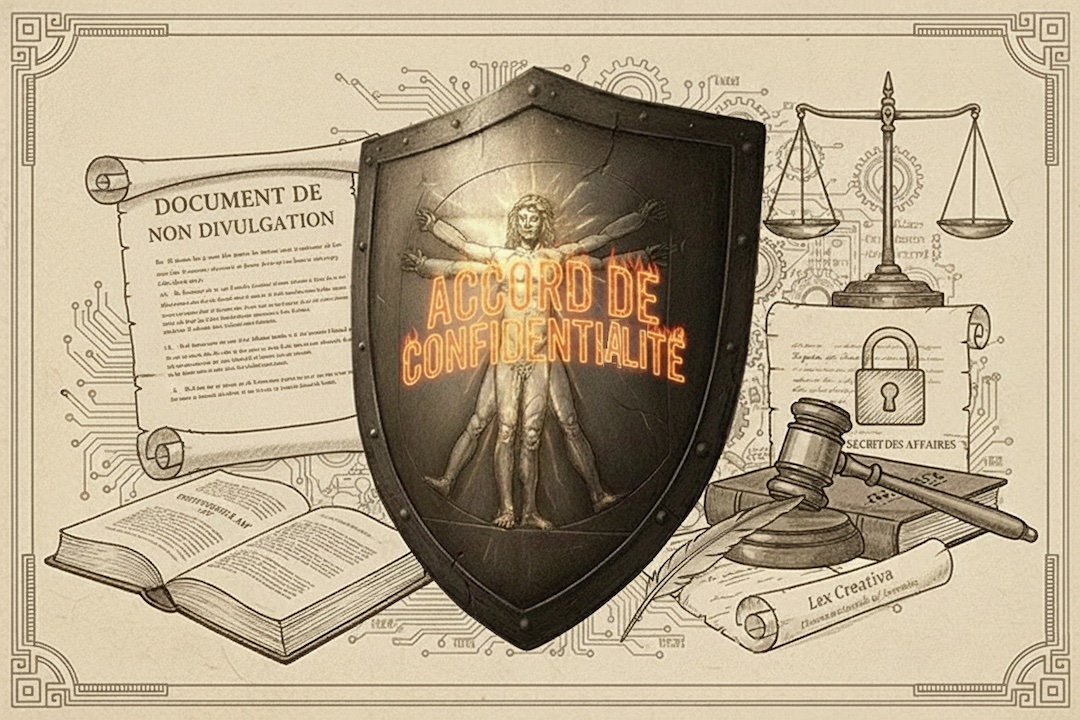
Unlike a patent, which grants a right to exclude others, protection by secrecy creates no exclusive right. It relies solely on the company’s ability to keep the information confidential.
Protecting know-how and trade secrets
A company’s know-how covers practical information, processes, manufacturing formulas, trade secrets or innovation methods, whether patentable or not, that can be transferred but are not public. Valuable know-how is a major intangible asset.
For know-how to be legally recognized and protectable, it must meet three cumulative conditions:
- It must be secret: the information is not generally known or easily accessible, and its value comes from its confidentiality. Secrecy is the cornerstone of protection: any disclosure, even accidental or lawful, ends it.
- It must be substantial: important for operations and useful (with real economic value) for production or company growth.
- It must be identified: described comprehensively enough (documented) to verify that it meets the secrecy and substantiality conditions.
Good to know: in the European Union, trade secrets are governed by the Trade Secrets Directive (EU 2016/943), transposed in each member state (in France by Law No. 2018-670).
The protection of know-how lies entirely in keeping it secret.
Beware of the risks: secrecy carries a major risk. A third party can reach the same result independently, or through reverse engineering (unless a contract prohibits it), and even patent the solution, blocking your access to the technology.
Essential measures to preserve trade secrets
Protecting know-how requires rigorous measures to preserve secrecy, under the responsibility of management. More broadly, implementing secrecy requires significant human, financial and organizational investment.
Contractual protection:
- Have anyone inside or outside the company who may access the information (employees, partners, subcontractors) sign a non-disclosure agreement (NDA), from the start of negotiations.
- Include non-compete clauses or reverse engineering bans in your contracts (employment, licenses, sales, terms and conditions, quotes).
Organizational protection:
- Raise employees' awareness of confidentiality and trade secret issues.
- Implement physical and IT security measures to restrict access to sensitive information (archives, servers, permission management).
Traceability and proof (identification and documentation):
- Document the know-how precisely and completely, making sure it is reproducible and transferable.
- Trace the creation of knowledge and exchanges with third parties.
- Use dated evidence tools, even if the innovation is not advanced enough for a patent: laboratory notebooks (paper or electronic) to document ongoing research and date the know-how created, and timestamped deposits offered by some IP offices (such as the Soleau or e-Soleau envelope in France) or by trusted timestamping services.
This traceability is essential to prove that your creation came first, which may allow you to invoke a prior user right if a third party later patents the same know-how.
A deceptive form of protection
Secrecy is often believed to cost less than a patent, but this is not necessarily true, and it can be completely wrong. You need to compartmentalize, partition and segment information, create false trails, set up legal frameworks and protocols. It is very complex, and you cannot rely on trade secret protection unless you can prove this organization.
Under these conditions, you can take action against a competitor or former employee who obtained secret information through improper and unauthorized means.
However, if a competitor obtains the information by chance, or legitimately on its own, the secret is out with no possible recourse: that is the key difference.
In any case, secrecy does not prevent someone else from doing the same thing, provided they do so honestly and fairly, without acquiring the secret fraudulently or unfairly. This is the fundamental difference with a patent, which is the only true right to exclude.
Note: keep in mind the difference between “protecting” in the patent sense, which gives you rights you can enforce against competitors, and “protecting” in the sense of not disclosing, which gives you few rights.
Other IP rights to protect an innovation
If a patent (which protects technical aspects) is not used, other complementary IP rights can protect different aspects of the creation.
Copyright
- Software: copyright protects the form of expression of software (source code, screen interface, menus, animations). It complements patents, which protect technical features if a technical effect is demonstrated.
- Limits: copyright does not protect ideas, concepts, mathematical methods or algorithms as such, which remain free for all to use.
Trademarks, designs and models
These rights protect elements that are crucial to marketing the invention.
Trademarks protect the signs that customers recognize (name, logo, slogan) and that distinguish your products or services from those of your competitors. A trademark can be renewed indefinitely (generally every 10 years). To be protected, it must be distinctive and available.
Designs protect the aesthetic appearance of a product, in two or three dimensions. The design must be new and have individual character.
These protections matter because a new product or service stands out through several aspects (technical, design, name, creative content) that each require their own protection.
Utility models: a real alternative to a patent?
Utility models, available in many countries (Germany, China, Japan, France and others), are a special case. They are industrial property titles, but in many countries they are granted without substantive examination of patentability, based only on formal and administrative checks, and without a prior art search.
Without an initial search report, a utility model has only relative validity compared with a patent. It cannot be considered a genuine alternative for protecting an invention without a patent.
The role of technology monitoring and IP management tools
Even without a patent, a company must make sure it has the freedom to exploit its innovation and does not infringe third-party rights.
Patent monitoring
Actively monitoring patents published by competitors or in your technical field keeps you informed of competitors’ strategies and avoids unnecessary R&D. If a potentially blocking patent is identified, you can choose different tactics, such as designing around the patented technology. Finding design-around solutions is a process of constrained creativity that can lead to new innovative solutions.
IP management tools
Software solutions such as those offered by PI Motion provide powerful patent monitoring, prior art search and freedom-to-operate analysis features, helping you anticipate and reduce the legal risks of exploiting an innovation, even an unpatented one.
This is especially true of Patent Pulse, a collaborative SaaS platform for patent search, analysis and monitoring. Some of its features:
- Worldwide patent coverage: an enriched patent database covering Europe, Switzerland, Asia (China, Korea, Japan, Taiwan), North and South America, and Australia.
- Semantic analysis and keyword alerts to stay informed of the latest patent filings.
- Simplified monitoring reports to share information across your organization.
In summary
When a patent is not possible or not desirable, secrecy is the main alternative, but it is demanding to organize and gives no right to exclude. Copyright, trademarks and designs protect other aspects of your innovation, while utility models offer only limited security. In every case, patent monitoring remains essential to secure your freedom to operate.
For a complete review of the options available to protect your invention without a patent, contact us.
FAQ: protecting an invention without a patent
Can I protect a simple idea?
No. Neither patents, nor copyright, nor IP in general protect a simple idea or an abstract concept. Only the concrete expression or implementation of an idea can be protected.
What is know-how and how is it protected?
Know-how is a body of practical and technical information that is secret, substantial and identified. It is protected only by keeping it secret, with confidentiality and traceability measures. It does not grant an exclusive right.
Can copyright replace a patent?
No, because they protect different things. A patent protects the technical solution of the invention, while copyright protects the form of expression of the creation (for example, software source code or artistic elements). They are complementary.
How can I prove the date of my creation without a patent?
You can keep laboratory notebooks, or use timestamped deposits offered by some IP offices (such as the Soleau envelope in France) or by trusted timestamping services. These tools prove the existence and date of your creations and know-how.
If I keep my invention secret, could I be blocked later?
Yes. A third party could develop the same invention independently and patent it, which could force you to pay for a license. In many countries, however, if you can prove prior possession (thanks to your traceability), you may keep the right to exploit your invention yourself.
Does a utility model protect me as well as a patent?
No. In many countries, utility models are granted without examination of patentability, which makes their validity uncertain. Only a granted patent provides a robust right to exclude that can be enforced against third parties.